 John Harbison’s Sixth Symphony is premiered by the Boston Symphony with mezzo Paula Murrihy this week. Harbison, Murrihy, and David Zinman, conductor for the premiere, discuss the piece at MIT this Wednesday. Update: more comments from JH about the piece here. Review in The Classical Review.
Tag: John Harbison
Harbison Symphonies 4, 5, and 6
The Boston Symphony is playing two Harbison symphonies in upcoming subscription sets. Go here, click on “more details” and you will find a links to program notes for the Fourth and Fifth Symphonies. The BSO concludes its cycle of all the composer’s symphonies with the premiere of the Sixth this coming January 12.
C4 offers Biggs premiere in NYC
C4 - the “choral composer/conductor collective - offers two performances this week including a new setting of Hopkins’ “The Caged Skylark” by Hayes Biggs, as well as “Ecstatic Meditations” by Aaron Jay Kernis, “The Hildegard Motets” by Frank Ferko and works by Jonathan David, Michael Dellaira, John Harbison, Robinson McClellan, and Tarik O’Regan. Here are the particulars:
Thursday, November 17th at 8:00PM
Holy Trinity Lutheran Church
3 West 65th Street, NYC
(at Central Park West)
and
Saturday, November 19th at 8:00PM
Church of St. Luke in the Fields
487 Hudson Street, NYC
(just south of Christopher Street)
All Saint’s Day Miscellany
- Network for New Music’s season opener is this coming Sunday, Nov. 6 at 7:30 pm at the World Cafe Live in Philadelphia. Program includes music by Ingrid Arauco, Joseph Hallman, Louis Karchin, Thomas Kraines, Andrew Rudin, Arne Running, and Robert Schultz.
- John Harbison talks about his 2nd Symphony here.
- the Library of Congress lets you see Elliott Carter’s sketches for his Piano Sonata, among other pieces, here.
- visit The Crooked Line to read how extraordinary a place Boston’s Emmanuel Church is, and why it is not a bad idea to have an artistic director who is also a gifted tenor. I have plans for a new Emmanuel motet, too early to let on about details.
- I have just about finished setting this poem for voice and piano, again, more details later.
Christine Rice sings Birtwistle
Christine Rice, soloist in yesterday’s Harbison premiere with the Met Orchestra, sings an excerpt from Birtwistle’s The Minotaur.
Heat Wave Miscellany
- new music in Philadelphia
When pointing out the Feldman and AACM festivals coming up in Philly, I should have also pointed out the Month of Moderns by Donald Nally’s choir The Crossing, and the Opera Company of Philadelphia’s performances of Henze’s Phaedra, featuring Tamara Mumford, whose performance in Queen of Spades I enjoyed so much earlier this season.(Thanks to David Patrick Stearns’s article in the Inquirer for the reminder.)
- recent listening: 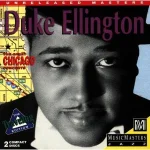
The Great Chicago Concerts (Jazz Heritage). Two very fine live 1946 performances by Ellington, including excerpts from Black, Brown & Beige (very different from the RCA Victor studio version), the Deep South Suite, a wonderfully strange take on Caravan, a rhapsodic Frankie and Johnny featuring a good bit of Ellington piano, and several loosely contructed tracks featuring, of all people, guest artist Django Reinhardt.
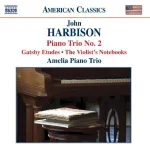 Chamber music of John Harbison (Naxos). Anchored by two piano trios, from 2003 and 1968, this incisively played album by the Amelia Piano Trio also features a number of miniatures: a set of charming Micro-Waltzes for piano, sets of solo viola pieces, the Gatsby Etudes based on music from Harbison’s opera, and more. There is an all-star viola quartet that includes Steven Tenenbom and Ida Kavafian, as well as Anthea Kreston, the violinist from the Amelia, and the composer himself. The early Trio, written when the composer was only 30, shows that Harbison had a darn good command of an edgy high-modernist atonal idiom, something he subsequently largely set aside; yet the more familiar voice that emerged is still present.
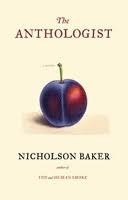 recent reading:
The Anthologist by Nicholson Baker. A gentle, melancholy first-person narrative about a minor poet failing to complete the preface to a poetry anthology. The hyper-detailed observations of Baker’s first books have drifted away, but he is still a keen observer. There is also a good deal of rather cranky and doubtful technical stuff about rhyme and meter (you may be startled to learn that pentameter doesn’t exist), and tales of the great poets that show the narrator’s - and the author’s - love for the world of poetry and the larger world through poetry.
Boston Adventure, Concluded
Two Arms of the Harbor, my new motet, was premiered at the 10 am Eucharist of Emmanuel Church, Boston this past Sunday. In the past, Emmanuel has slotted my motets after the opening prayer but before the first reading. This time they did the piece after the first reading, in lieu of a responsorial psalm, I suppose. I am not sure this was the best strategy. The readings were very well done, but I think the music had too much expressive weight to successfully work between them. Music between the readings should not overwhelm the scriptures, which are the primary focus of that part of the service, and my piece is too emotionally hot and packed with incident to not be a little overpowering in that spot. At the time I thought about how I would not want to be doing the second reading right after the motet. The vibe in the room was attentive and I think the piece hit home, partly because of how it felt at the time, partly because of the warm comments after the service. Thank you to whoever removed their vocalizing child from the church while my piece was being done!
I was sorry to not hear the church’s rector, Rev. Pamela Werntz preach, but the visiting homilist, Rt. Rev. J. Clark Grew (a retired bishop, if I understand correctly) did well. And it was a pleasure to celebrate a baptism as well - congratulations to the Miles Family! I thought Sumner Thompson, bass, did a superb job with the cantata after communion, BWV 158. John Harbison has a good note speculating about this somewhat unusual piece. The aria with chorale - layering a florid (flaying a lurid? sorry.) solo singer with an even more florid violin obligato (Heidi Braun-Hill), a walking continuo bass and a chorale tune sung by the women of the chorus - was the quietly spectacular high point. The text of the final chorale, right out of Luther, is almost surrealistic:
Here is the true Easter-lamb, offered up by God, which was, high on the cross’ stalk, roasted in hot love, the blood marks our door faith holds it against death, the strangler can no longer harm us, Hallelujah!
There was a lovely brunch after the service and coffee hour, glad to have a chance to chat with various Emmanuel friends, including fellow blogger Joy Howard, who is Rev. Pam’s spouse.
Sunday evening I attended a fund raiser for Collage New Music. The event featured some chat between the group’s music director, David Hoose, and guest Augusta Read Thomas with some short pieces of Gusty played in first-rate performances. I’m sorry I didn’t catch the name of the violinist and cellist, but the pianist was the splendid Christopher Oldfather - Chris and I go back some 20 years or more, to the first performance of my Three Sacred Songs with soprano Christine Schadeberg. His performance of excerpts from Gusty’s Tracings was stunning. Here are some pictures from the event, including a shot of Gusty and I with Gunther Schuller:


and one with Chris Oldfather:

The coda to the Boston trip was a visit to NYC for the American Music Center annual meeting. The AMC/MTC/ACF merger/re-arrangement was discussed, official decision not yet made until votes are tallied. John Harbison received an award:

Among the friends at the meeting were fellow Columbia alums Eric Chasalow (l.) and Paul Moravec:

Now it’s back to grading papers and chairmanly duties at Penn. But good to see friends, good to hear some music.
Instant Encore playlist
Now playing at Instant Encore:
- Ryan MacEvoy McCollough plays Andrew McPherson’s Secrets of Antikithera and John Harbison’s Second Piano Sonata.
- two works of mine are available: the Albany Symphony playing Luminism (various posts about the piece begin here), and organist Karel Paukert playing my Meditation on “What Wondrous Love is This?”
- Da Capo Chamber Players offer music by Cleveland composers Keith Fitch, Andrew Rindfleisch, and Greg D’Alessio.
- Darknesse Visible, a piano work by Thomas Adés, played by Hoang Pham.
- the Ying Quartet offers Chou Wen-Chung’s First String Quartet, “Clouds”.
Composers Talking
Mehldau at Carnegie
Except in the few movements where the strings hold the spotlight, or where the woodwinds and horns elaborate briefly on a theme, the orchestral scoring is secondary, and for long stretches the St. Paul musicians sat silently.
-Allen Kozinn in the New York Times on the premiere of Brad Mehldau’s Highway Rider for jazz ensemble and orchestra.
I am quite certain that Brad Mehldau is one of the very top jazz pianists active today. I am less certain that he is the very top choice of composer to be given opportunities to write for Renee Fleming, Anne Sophie von Otter, or the St. Paul Chamber Orchestra, and to be composer-in-residence at Carnegie Hall. It’s not that jazz artists shouldn’t be allowed sully the holy institution of The Orchestra with their grimy hands. That’s just dumb. But it does seem odd for Mehldau to have opportunities of this stature.
I look forward to, say, John Harbison, or Augusta Read Thomas being offered a commission by Jazz at Lincoln Center. More about Renee Fleming here.
