Sandow on Pulitzer

So Greg Sandow in a series of recent posts (here’s the first) wants to know why the Pulitzer prize never goes to pop music, fending off arguments by saying you aren’t on the same planet as he if you don’t think, for example, Bob Dylan represents some of the best in American music. Personally, I hardly think of Bob Dylan as a musician at all, but that’s my bias. When I set aside that bias for a moment, I, of course, recognize Dylan, and all the other folks Sandow mentions, as terrifically important figures who are the very best at what they do, and I love the work of some of them. But what they do is too different from what classical musicians do to throw them all into the same pool. To invoke the cliche, we really are talking about apples and oranges here, or maybe apples and pine trees. How could you possibly pick between, say, Lucinda Williams and Peter Lieberson? You don’t make the swimmers and the marathon runners compete against each other at the Olympics, right? To really give a broader spectrum of music its due we would need more than one award. How to divide it up? Notated and non-notated? (with jazz on either side of the fence?) Best score and best recording?

With one prize, the consequence of including pop will be to make the prize reflect the marginal place of classical music in the wider culture. Exactly why is that a good thing?

By the way, Sandow is not quite right about none of the finalists in recent years coming from outside the classical realm. Don Byron (2009) is best known as a jazz musician, John Zorn (2000) is beyond category, but is certainly not part of the classical world the way other finalists are, and it could be argued that Elliot Goldenthal (2007) is better known as a composer of film scores than for his classical pieces.
Pulitzer Grammar

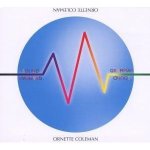
Monday’s announcement of the Pulitzer Prize in music (warm congratulations, Jennifer!) inspired me to pull out the CD that won the 2007 prize for Ornette Coleman: Sound Grammar.

I was struck by how tuneful the album is, even to the point of quoting other melodies. There are certainly plenty of edgy moments here, but if you only know Coleman from Intro to Jazz class, where he is the token scary, inscrutable avant-gardiste, this record presents a rather different picture. Listen to the hauntingly folk-like, archaic quality of Sleep Talking,  a meditation on the opening notes of Rite of Spring. Who do you think of as a saxophonist who would quote “Beautiful Dreamer” and “If I Loved You” in a blues solo? Maybe Dexter Gordon? how about Ornette Coleman?

The instrumentation of the album - Coleman is accompanied by two basses and drums - seems odd, but the two basses actually work out better than one might expect. Usually one is playing arco, the other pizz. The high register arco bass serves as another frontline instrument, often sounding in the alto sax register. The harmonic specificity of a keyboard or guitar would unhelpfully tie down Coleman’s pitch language, and the absence of a chordal instrument gives more sonic space for the two basses.

I posted a while back about the treatment of rhythm on Vijay Iyer’s Historicity - Coleman’s approach can be similarly rich. A common strategy here is to have pizz bass and drums playing at a furious tempo while Coleman lopes along at a more moderate speed, not precisely half time, but still feeling right.

Sometimes Coleman’s flexible treatment of intonation is merely gamey instead of expressive. And the last track on the album includes a freakout section for the two basses that overstays its welcome. But I can see why this disc won a major award.

===============

update: read Jennifer Higdon’s remarkably gracious comments about the Pulitzer here.