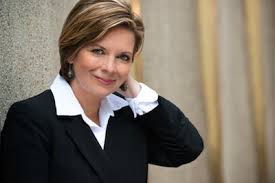
Opera News on “Sacred Songs”

A review by Joshua Rosenblum of my Sacred Songs album has appeared on the Opera News website. It’s only available for subscribers, so I’ll just offer a few quotes here:

“Primosch’s text-setting instincts are seemingly unerring: his vocal lines always convey the words authentically and honestly, while the instrumental accompaniment provides added depth and drama…”

“Soprano Susan Narucki, who sings three out of the four cycles, has musical intelligence to spare, as well as a clear, ingratiating delivery and sure intonation…”

“Baritone William Sharp uses his resonant, authoritative voice to provide a gripping, inexorable build…” [in the song cycle Dark the Star]

Corde Natus Ex Parentis” from the cycle Four Sacred Songs, has a straightforward, attractively contoured, plainchant-style melody, but the composer adorns it with imaginatively layered instrumental counterpoint in subsequent verses. “Christus Factus Est” has another clearly tonal melody, but the subtly dissonant leanings of the accompaniment form a painfully apt depiction of Christ on the cross.  Narucki’s performance of this quietly devastating number is a delicate marvel.”

“These songs are unfailingly compelling, whether the musical language is complex or seemingly simple… Christopher Kendall skillfully and sensitively leads the 21st Century Consort, which provides superb accompaniment.”

Sacred Songs: program notes, part II

Here are the program notes for the other two pieces on my new CD on Bridge. (The first installment is here). The pictures below are of the Grammy winning soloists on the disc, Bill Sharp and Susan Narucki.

Dark the Star

Unknown-3Composing this cycle of songs began with my discovery of three poems in Susan Stewart’s collection Columbarium that I knew I must set to music. The deep, dreamlike wisdom of these poems haunted me, just as I had experienced with Susan’s poem “Cinder” that had served as the fulcrum of my song cycle Holy the Firm. Eventually, texts by Rilke and an earlier setting I had done of a psalm verse were drawn into the gravitational orbit of Susan’s poems. I ordered the texts in a nearly symmetrical pattern, with two poems set a second time in versions that shadow their first readings. This is partly for the sake of the formal design, but, more importantly, to re-examine the poems in the penumbra of what comes before. Rounding the cycle in this way reflects not only the circles and repetitions in Susan Stewart’s texts, but also the way in which, as Rilke writes, the things we have let go yet encircle us.

William Sharp and the 21st Century Consort premiered this cycle in 2008.

Holy the Firm

Unknown-2The little anthology of texts dealing with praise and mystery that I have assembled for this song cycle draws upon writings of three twentieth-century American women and a monk of the seventh century Sinai desert. It may be helpful to know that the fifth text is excerpted from a found poem based upon phrases culled from the Dictionary of Last Words edited by Edward S. Le Comte.  The wide-ranging affects of the texts called forth a similar range of musical languages but there are many recurrences, both musical and textual, that bind the songs together.

The cycle’s title is borrowed from that of a book by Annie Dillard that also provided the words for the second song. In that book, Dillard writes: “Esoteric Christianity, I read, posits a substance. It is a created substance, lower than metals and minerals on a ‘spiritual scale’, and lower than salts and earths, occurring beneath salts and earths in the waxy deepness of planets, but never on the surface of planets where men could discern it; and it is in touch with the Absolute at base. In touch with the Absolute! At base. The name of this substance is: Holy the Firm.”

Dawn Upshaw and Gilbert Kalish gave the first performance of the original piano and voice version of Holy the Firm in 1999. I subsequently made this chamber version for Susan Narucki and the 21st Century Consort; those artists gave the premiere in 2002.

Sacred Songs: program notes

My new CD, Sacred Songs, is coming out on Bridge Records this Tuesday. Here are program notes for two of the pieces on the disc - notes on the other two pieces in tomorrow’s post. John Harbison’s  booklet essay for the disc is here. That’s the soloist for these pieces, Susan Narucki, pictured below.

From a Book of Hours 

UnknownThis cycle of songs sets four poems from an early collection by Rilke entitled Das Stundenbuch, or in English, Book of Hours. Although the title refers to a medieval book of prayers for the various times of day and seasons of the liturgical year, Rilke’s texts occupy a position some distance from conventional piety.  There is a melancholy to the spirituality expressed here, which speaks of an experience of God that is fragmentary, imperfect, and unattainable. The solitude evoked in the second song (as layers of busy activity are gradually peeled away) offers some solace, but the third song is very dark and fierce, filled with a desperate, even manic desire for God. The last song returns to the mood of the first, but now in a global rather than individual context. This song, like the set as a whole, speaks of our world’s brokenness, yet strives to stammer fragments of God’s name.

Originally composed in an orchestral version on a commission from the Chicago Symphony, this chamber ensemble version was prepared for Susan Narucki and the 21st Century Consort, with Christopher Kendall conductor, who gave the first performance in 2007.

Four Sacred Songs

When soprano Christine Schadeberg asked me to compose a new work for her 1989 Town Hall recital, she asked for something lighter in tone than my usual style, suggesting that I consider writing some folk song arrangements.  I agreed to the idea of arrangements, but rather than folk songs, I chose three old sacred melodies; the idea of sharing with a concert audience a few of the musical riches that I had encountered in my work as a liturgical musician was particularly attractive. In 1990 I orchestrated these piano and voice songs, adding the second movement which exists only in the chamber ensemble version. The first performance was given by Christine Schadeberg with the ensemble Voices of Change.

The first song, “Jesu Dulcis Memoria”, is a strophic chant hymn with a text by St. Bernard of Clairvaux, the great Cistercian monk and preacher.

I have set “Corde Natus Ex Parentis” using a somewhat free version of the medieval technique known as a mensuration canon: except for a few freely imitative phrases, all the parts have the same melody, but played at different speeds.  For example, the low cello and harp notes mark out the tune at a pace six times slower than the voice.

The chant “Christus Factus Est” appears in the Liber Usualis  as part of the Holy Week liturgy; the melody is unusually wide-ranging and highly melismatic.  The text is part of St. Paul’s famous “Philippians Hymn”, and speaks of the mystery of Christ’s suffering and exaltation.

The origins of the tune for “O Filli et Filliae” are obscure, and may be secular in nature.  The words somewhat discontinuously narrate the Easter story, closing with a call to give praise and thanks to God.

Sacred Songs on Bridge Records

UnknownI’m very happy to report that Bridge Records will be issuing a new CD of my music in early 2014. The disc, to be called Sacred Songs, will bring together four of my pieces for voice and ensemble:

- From a Book of Hours sets four poems of Rainer Maria Rilke in German.

- Four Sacred Songs comprises arrangements of old traditional sacred melodies - plainchant as well as metered tunes - with Latin texts.

- Dark the Star brings together texts by Philadelphia-based poet Susan Stewart, Rilke (in German), and a verse from the Psalms (in Latin).

- Holy the Firm sets texts by three American women - Denise Levertov, Annie Dillard, and Susan Stewart - as well as John Climacus, a monk of the 7th century Sinai desert.

The performers are Susan Narucki, soprano, William Sharp, baritone, and the 21st Century Consort, led by Christopher Kendall.

While I am very grateful for every CD of my music, (visit the discography page to get the details on how much I have to be grateful for), this new Bridge project is especially meaningful to me. This is partly because it is the first disc devoted entirely to my vocal music, a medium that has been a major preoccupation of mine in the last two decades. It also documents an especially long-standing relationship with performers who have been among the most consistent advocates of my music. In fact, I think that over a period of more than three decades, Christopher Kendall has conducted and/or programmed my music more than any other musician anywhere!

There is a lot more to say about this album - the pieces, the performers, the process of recording with Curt Wittig and editing with George Blood, the booklet essays by Susan Stewart and John Harbison, and I will be writing about these things in future posts. For now I will leave you with the photo above. This is the interior of St. Henry’s Ecumenical Art Chapel, designed by the firm of Sanaksenaho Architects, and photographed by Jussi Tiainen. This powerful image will be used for the cover of the booklet accompanying Sacred Songs.

Singing and Meditating in DC

Soprano Mary Mackenzie, the 21st Century Consort, the Folger Consort, and members of the National Cathedral Chant Choir all did a great job recording and performing my Sacred Songs and Meditations in Washington, DC last weekend. Mary is quite a find: her sound is sweet and true and rich in all registers, her musicianship is first class, she is musically smart, and she knows how to connect with an audience. The instrumentalists, some of whom I have known for years, were up to their usual high standard. Special thanks go to the folks playing the early instruments, who were cheerful and patient in the face of the unwittingly awkward parts I wrote for their instruments.

The Cathedral is a handsome Gothic structure in northwest DC, about 25 minutes by bus from the National Mall.

IMG_2905

The building was damaged in the earthquake that hit the east coast a while back, and repairs continue:

IMG_2904

A simple font stands in the middle of the nave. The placement and lighting look well, but the base needs some touching up with gold paint:

IMG_2914

Entering the place in the early evening, the late day sun made for some magical projections of color from the clerestory windows that my amateur photography skills can only hint at:

IMG_2910

Unlike the previous performance of the piece at the Cathedral which took place in the transept, this time we worked in what they call the Great Choir, in front of the high altar. The choir stalls are intricately carved:

IMG_2918

Here’s conductor (and director of the 21st Century Consort, as well as lutenist of the Folger Consort) Christopher Kendall (in the dark shirt) consulting with producer Joseph Gascho. The performers, from left to right, are Rachel Young, cello; Sara Sterne, flute; Mary Mackenzie, soprano; Susan Robinson, harp; Gwyn Roberts, recorder; Lee Hinkle, percussion; and Robert Eisenstein, viol.

IMG_2921

The control room was a set up in an office not far from the high altar. This lent a monastic atmosphere to the proceedings; here is engineer Mark Huffman:

IMG_2945

and here is Joseph Gascho speaking to the performers:

IMG_2951

A few shots of the players at work, both “the moderns” (that’s violinist Elisabeth Adkins, with clarinetist Ed Cabarga at right):

IMG_2942

and “the earlys” (Amy Domingues is the viol player at the far right):

IMG_2941

Unfortunately I never got a picture of the men and girls from the Cathedral Chant Choir, directed by Michael McCarthy - before each movement of my piece they sang the incipit of the chant or carol melody on which the movement is based. They sang with uncommon refinement and unanimity of pitch, color and articulation, and I am very grateful for their efforts.

I’ll close with two pictures of the Cathedral - one taken looking down the nave from the choir, the other outside at night. (The netting visible in the interior shot is to protect those in the building from the possibility of falling stones from the earthquake damage - I am told the netting is just a precaution and has not been put to the test.)

IMG_2915

IMG_2934

Downtown and Uptown

IMG_0086My unwittingly cubist photo of buildings in downtown New York, including the Freedom Tower, was taken during the first part of my recent visit to New York, where I met Deirdre Chadwick, BMI’s executive director for classical music for excellent coffee and a chocolate chip cookie near BMI’s offices in 7 World Trade Center.

300px-St_Jean_Baptiste_Church,_New_York,_NYThen it was uptown to St. Jean Baptiste Church for a performance of my motet Salve Regina during the installation service for the parish’s new pastor, John Kamas. Kyler Brown led a lovely performance by the choir of St. Jean’s. One member of the choir is Mary Mackenzie, who will be performing and recording my Sacred Songs and Meditations starting the end of next week. Go here for more on the July 8 concert that will include members of both the Folger Consort of early music instruments, and the modern instruments of the 21st Century Consort.

Here’s a picture of me with John, the new pastor at St. Jean’s.IMG_0090

The Parts are in the Mail

I finally got the parts in the mail today for the piece being done at the National Cathedral in July by the combined forces of the 21st Century Consort and the Folger Consort, with soprano Mary Mackenzie. I hope now to get back to more regular blogging. As a start, here is a link a scholarly colleague sent me - you don’t have to be a musicologist to find the site amusing.

Autumn Miscellany

OK, so this is a little late for the first day of autumn, but it is still miscellaneous:

- Davd Patrick Stearns weighs in with a positive spin on the Allen Kozinn re-assignment story.

- season brochures are coming in over the transom thickly now. Boston’s Collage is offering Feldman, Saariaho, Corey Dargel, Yehudi Wyner, and the late George Edwards. They are also presenting Christopher Taylor doing the complete Vingt Regards of Messiaen.

In DC, the 21st Century Consort’s year includes music by David Froom, Stephen Albert (my favorite piece of his, a Joyce setting called To Wake the Dead), Donald Crockett and Derek Bermel. Here’s how the Albert begins:

- go here for the sound of Wallace Stevens reading.

- and go here for George Perle, Paul Lansky, and Virgil Moorefield on three generations of composition teachers.

Early Heat Wave Miscellany

- First, two links outside the realm of music: I found this very impressive and touching, and this to be right on target.

- Prism Quartet concerts are coming up - Thursday, May 31 at Symphony Space in NYC; Saturday, June 2 at First Unitarian in Philadelphia.

—————————————————————-

Yesterday I finished a rough draft of the first of the new set of songs I am working on with Susan Stewart - I met Susan this afternoon, played through the draft, and she was pleased with what I’ve done! Now it’s into the studio with George Blood for two editing sessions this week as we attempt to wrestle this 21st Century Consort CD project to the ground - vocal pieces of mine featuring Susan Narucki and William Sharp. Will report on progress later this week.