Ab Ex at MOMA

When I was in New York for the SongFusion debut concert recently, I spent the afternoon at the MOMA, looking at the Ab Ex show, Ab Ex as in Abstract Expressionist. It is a wonderful show, with some very famous paintings (“Vir Heroicus Sublimis” of Barnett Newman, and De Kooning’s “Woman” are just two examples) plus a number of pieces that were new to me. In the latter category, I liked the rich, vivid color and dynamic forms of a Grace Hartigan piece, and was impressed by the photographs in the show, not a medium usually associated with abstract expressionism. Two things struck me forcibly: one was how the paintings, which I used to think of as “my” contemporary art (even though much of it was painted before I was born, and partly because of my disinterest in the pop and minimalist work that came just afterward), now looks, well, not dated, but historical. It looks strong and fresh as any good art, but it looks like something from an earlier period. I guess I am from an earlier period, as well. The other thing that startled me was how many visitors to the show experienced it through the viewfinders of their pocket cameras. Perhaps this is a recent trend reflecting the contemporary tendency to whip out one’s camera at the least provocation, perhaps it was just noticeable because the show permitted photography and most museum shows do not. Between the cameras and the people holding audio guide handsets (looking like huge ancient cell phones), a large percentage of attendees experienced a show of paintings mediated by technology. What is the comparison with concerts? Being on the lawn listening to amplified sound at Tanglewood?

I liked the quote from Joan Mitchell on a wall placard near her painting, a comment on the need for structure in her work: “I don’t just close my eyes and hope for the best.”

Check out the slide show about the exhibit at Slate.

Piston’s Harmonies

For certain generations of musicians, the words “Piston Harmony” were synonymous with the study of tonal harmony because composer Walter Piston‘s textbook dominated the field. That’s no longer the case, and I should not be surprised when grad students don’t even recognize the composer’s name, either for the textbook, or for his role as one of the more important American composers of the mid-20th century. Leon Botstein and the American Symphony Orchestra will address the neglect of Piston’s music with an all-Piston concert at Carnegie on March 29. There will be two symphonies, the 2nd and 4th, and two concerted works, with superb soloists: Miranda Cuckson will play the Violin Concerto #1 and Blair McMillen plays the Concertino for piano and chamber orchestra. Do check out the “Dialogues and Extensions” on the concert page linked above - there are worthwhile essays on Piston by Maestro Botstein and Carol Oja. Many more essays related to ASO concerts here. A Mark DeVoto talk on Piston here.

Ash Wednesday Miscellany

-The oboe explained.

-Prism plays Xenakis, Penn alum Stratis Minakakis, and more - in Philly, March 19; in NYC March 21. Details here.

-Talea Ensemble, presented by the Washington Square Contemporary Music Society, at Merkin in NYC, March 24. Program includes Aaron Cassidy, David Fulmer, Elizabeth Hoffman, Fred Lerdahl, Rand Steiger, and Evan Ziporyn.

-San Francisco Contemporary Music Players offer their 40th Anniversary concert on April 4 at the Herbst Theater, featuring guest artist Terry Riley and a performance of In C. The group recently named Steven Schick as their artistic director.

-Possibly helpful for your Lenten practice.

Getting Sentimental with Charles Rosen

I just finished Charles Rosen’s recent Music and Sentiment. It is a slim volume, at least compared to some of his earlier books, like The Romantic Generation.  But even though this short book may not probe as deeply as some of his others, he remains masterful. Rosen knows an awful lot about an awful lot, though not without his limitations - see below.

Here his concern is the play of affect in musical phrases. He is intrigued by the way the Viennese classics juxtapose elements expressing contrasting sentiments, something earlier and later musics avoid. A good deal of the book is therefore a celebration of a relatively elementary concept, the contrasting period. Theory I students learn that successive musical phrases can either be parallel or contrasting, and something like the opening of the Jupiter Symphony - an imperious call to attention followed by a more lyrical phrase - embodies such contrasts (although there the contrast is within the phrase, rather than the period). Rosen points out that the Romantics tended to prefer that phrases continue with the same affect, only more so, a tendency reflected in the title of his last chapter, “Obessions”. He is weakest on 20th century style, talking a bit about Debussy and Ravel, but having nothing to say about, for example, how the jump cuts in Stravinsky compare with earlier expressive juxtapositions. I wish he had commented on the modernist music that he plays - Carter in particular certainly relies on rapidly contrasting sentiments, even if not always at the level of the phrase. Rosen seems entirely too content with the fact that he knows nothing about styles after Carter and Boulez and how those styles treat affect. He simply lists a variety of journalistic labels applied to various relatively recent musics and says how the second half of the 20th century still seems “chaotic” in its array of styles. The one thing he thinks he knows is that 20th century forms of harmonic practice are inferior to classical tonality because they lack precision in their delineation of the tonal landscape. Does he really think Bartok’s harmonic structures are flabby? Would he say the same if he knew something about Perle, Harbison, or Martino; Rakowski, Currier, or Melinda Wagner?

Revisiting New Music at the Philadelphia Orchestra

First, a correction: in this post, I listed works by Higdon, Torke, and Salonen as the only pieces by living composers during next year’s Philadelphia Orchestra season. I omitted a work by Lorenzo Palomo, whose Nocturnos de Andalucia will be performed. Apologies to the Philadelphia and Mr. Palomo.

Second, by way of comparison: The New York Philharmonic will perform seven works by living composers during subscription concerts next season, plus six more on special “Contact” new music concerts. In addition, although he is technically deceased and therefore not a living composer (at least not on this planet), the Philharmonic will also play Stockhausen’s Gruppen as a special event. The San Francisco Symphony will also play seven pieces by living composers on regular concerts - but they will additionally do a good bit more as part of next year’s iteration of the “American Mavericks” festival, which will also tour. Visiting orchestras to Davies Hall in SF seem to play a lot of new music as well, including the Philadelphia Orchestra’s presentation of a work by Behzad Ranjbaran.

Now, four pieces by living composers is about four more than a great many orchestras in this country will play next season, and as a composer and a concertgoer I am grateful for these four. Yet, I do hope the Philadelphia will increase its presentations of new music as Yannick settles in.

Bravo, Mario

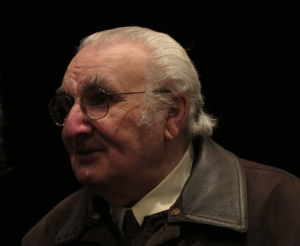
Mario Davidovsky is best known for his work in the electronic medium, with his series of works for live instruments and electronic sound called Synchronisms serving as exemplary models for the genre. But Mario, who was my mentor during my days as a Columbia University doctoral student, has mostly worked in instrumental music for a number of years. There were samples of instrumental, vocal, and electronic works heard at Friday’s all-Davidovsky concert at Miller Theater in New York. The performances by the International Contemporary Ensemble were very strong, although the dry acoustic of Miller robbed their playing of some of its vibrancy. The ninth and twelfth Synchronisms were heard, played respectively by violinist David Bowlin and clarinetist Joshua Eubin. There were three purely instrumental works from the ’90s as well. All this music continues to dazzle, not just for the scintillating rapid gestures, but for the intensely lyrical lines that constitute the heart of the piece - “heart” both in the sense of telling affect, and of inner structure.

I think one reason Davidovsky’s instrumental music is less widely known than it should be is that his music resists ready labeling. Although he is usually bracketed with so-called “uptown” composers such as Babbitt, Wuorinen, and Martino, his music stands a bit apart from those masters because it is not really serial music - twelve-tone (fully chromatic), yes, but rather more non-systematic than genuinely serial works. (Or should I say “even more non-systematic”?) Good luck trying to trace rows, etc. in Mario’s music.* There are games with hexachords (go through the piano Synchronism), and strategies involving the deployment of registers. But Mario, though he admires the surfaces of various kinds of serial music, relies on different forms of rigor than someone more closely aligned with serial techniques.  It is a rigor that springs more exclusively from the play of forms, the interaction of motifs, from the fantastical patterns woven from vivid, passionate gestures.

The most memorable performance of the night was given by soprano Tony Arnold, who lent her clear, pure sound to Mario’s settings of Spanish folk poetry, Romancero. The final song in the set is about King David lamenting Absalom. Here the accompaniment is very spare, with hushed cantillation from the violin. Tony’s singing was utterly heartbreaking, all the more powerful for the restraint of Mario’s setting.

Interviews with Mario here and here. Three works can be heard at Art of the States. Picture above taken at last Friday’s concert.

*It is interesting that Joseph Straus omits Mario from his collection of short analyses of music by 37 twelve-tone composers in his recent book on the history of twelve-tone music in America; I would say he is the most important composer left out. Of course, Straus couldn’t cover everyone of importance, and if anyone can figure out the technical aspects of Mario’s music, Joseph Straus can. But still, I wonder if the non-systematic nature of the music played a role in Straus’s choice.

Wednesday afternoon miscellany

-The Pew Fellowships in the Arts, a program of the Pew Center for Arts and Heritage, has begun a blog. Check out the “100 Fellows” video here.

- Mario Davidovsky gets the Composer Portrait treatment - a full evening of his music - at Miller Theater on the Columbia University campus in New York this Friday. I’ll be there, will be blogging about it.

-Marilyn Nonken plays the music of Tristan Murail at Delaware County Community College in suburban Philadelphia this Sunday, March 6.

(at left: Mario Davidovsky)

SongFusion debut

It was a pleasure to hear soprano Mary MacKenzie and pianist Kathleen Tagg perform two of my Three Sacred Songs Monday night at St. Jean Baptiste Church on Manhattan’s upper east side. This was part of a program previewing the concerts planned for next season by the members of SongFusion - three singers and two pianists devoted to fresh presentations of the art of song. The other core members of the group are Victoria Browers, soprano; Michael Kelly, baritone; and Liza Stepanova, piano. They were joined Monday by guests Kevork Mourad, a visual artist; John Romeri, flute; and Michael Truesdell, percussion. The program was quite wonderfully varied, with thoughtful and imaginative programming. There was a Liszt group (it’s the 200th anniversary of his birth this year) that included three settings of “Was Liebe Sei”, written at different times in the composer’s life. A German group (Schumann, Strauss, Schubert) included projected drawings by Kevork Mourad. To me, this was too much of a good thing; a song listener is already dividing attention between singer and printed poem; the drawings, moody and evocative though they were, proved more than I could deal with. After intermission there were some pieces without piano: five short Virgil Thomson songs on phrases from the Song of Solomon, with light touches of percussion accompanying Mary; and a set of Irish folk song settings by John Corigliano, with Victoria in duo with flute. There were two couples for “The Old Gray Couple” of John Musto: Mary and Michael portrayed the title couple, and the pianists provided four-hand accompaniment. (I’ve never tried writing vocal duets with piano, it seems like something worth exploring…) Mary closed with my songs, which are arrangements of old sacred melodies, with Latin texts. She and Kathleen beautifully captured the repose of “Jesu Dulcis Memoria” and the exuberance of “O Fillii et Filliae”. In fact, there were very fine performances all evening - I look forward to hearing the group next season.

There was a lovely set of coincidences at play here. I know Mary from hearing her do my Three Sacreds at John Harbison’s Token Creek Festival - she subsequently did them as well as excerpts from my Holy the Firm in Philadelphia. Among other work as a New York free-lancer, Mary is a member of the professional choir at St. Jean’s, a church that is staffed by the Blessed Sacrament Fathers, the order that staffed the church in which I grew up back in Cleveland. John Kamas, a priest who was on staff in Cleveland - where he gave me my very first commission - and who has served as pastor at St. Jean’s, hired me to substitute a few times as organist when I was living in NYC in the 80’s. And who should I see when I walked into the church Monday night, having had a fine supper with John - but Judith Kellock, the superb soprano I know from Songfest, where I accompanied her in excerpts from my Holy the Firm when we were both on faculty there. It was at Songfest that Judy met members of SongFusion.

(picture: interior of St. Jean Baptiste Church)