 I shouldn’t let all the excitement about the upcoming CSO premiere lead me to neglect mentioning upcoming performances of my Dancepiece by the Da Capo Chamber Players. They will include the piece as part of a program of music by Philadelphia composers, to be given at Merkin Hall in NYC on Tuesday, October 27. They then take the program up to Bard College the next day. Da Capo has been a mainstay on the New York scene for a good long while now. Joan Tower was the original pianist with the group. It now includes a mix of veterans (Andre Emilianoff, Pat Spencer, Curt Macomber) and younger players (Blair McMillen, Meighan Stoops). I last hear them playing a sober and elegant contribution to the memorial service for George Perle earlier this year.
Month: October 2009
Watching Dudamel
I enjoyed the new John Adams symphonic suite, City Noir, on the PBS broadcast of the L.A. Phil’s inaugural concert with Gustavo Dudamel. But beyond enjoying the piece, it was a pleasure simply to see 30 minutes of PBS airtime given to a new American composition.
Another pleasure was to see colleague Tim McAllister from the Prism Saxophone Quartet playing the virtuosic saxophone solos in the Adams. His vivid and impassioned playing was a highlight of the piece. Head over to the Audio Samples page at jamesprimosch.com to hear Prism playing a clip from my Short Stories.
Read all about it
Program notes for Songs for Adam are now up on the Chicago Symphony website.
Expulsion
 I had a fine talk on Friday with Brian Mulligan, soloist for Songs for Adam. He likes the piece, which is no small matter; a professional will always do his best, but enjoying what you are doing makes giving your best easier. Brian had smart questions about the poetry for the cycle, and after I talked with him about the issues he raised, I encouraged him to contact the poet herself, Susan Stewart. (You can read the poetry for Songs for Adam in her newest book, Red Rover.) Susan later sent a note to both Brian and me, with a link to the image seen at left of the Expulsion from Eden by Masaccio. You can hear my setting of Susan’s poem about the Expulsion at the audio samples page of jamesprimosch.com.
All caps
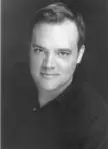 So the word from Donald Nally - chorus master at the Lyric Opera of Chicago, and director of the superb choir The Crossing - is that Brian Mulligan (pictured at left), the soloist for my new cycle “Songs for Adam” later this month, has a “TRULY BEAUTIFUL” voice. As Susan Stewart, poet for the cycle, remarked on hearing this, “It is hard to beat ‘truly beautiful’ in all caps.” There are plenty of good quotes about Brian at his IMG page, but hearing this description from a colleague means more.
Now Playing
J. S. Bach: The Well-Tempered Clavier, Book Two. Edward Aldwell, piano. Nonesuch
 This is Bach playing that doesn’t draw attention to itself. It’s never dazzlingly fast; I am never awestruck with the variety of texture and articulation as I am with Murray Perahia’s Goldberg, or Schiff’s English Suites. With Aldwell, I feel like I’m listening not to piano playing, but to Bach. That can be quite enough.
So you’re a composer …
How do you answer that question - “so you’re a composer - what kind of music do you write?” I usually evade the “kind of music” question by changing it into a question about the medium for which I write - “Oh, I do all kinds of things, chamber music, songs, sometimes orchestral music.” What can I possibly say about style that would be meaningful to most people? By saying something about the medium, I open a door for my questioner, showing them a room that they probably didn’t know was there, a place where a string quartet or orchestral work might be written, a place where some musical possibilities exist that can’t be found elsewhere in the house of music.
Square One
Another blog?
Yes. Another blog.
Another composer blog? Another composer trying to drum up business?
I admit it. After all, there is a link to my composerly website right here. Perhaps you stumbled across this blog, but now that you are here you might amble over to the audio clips or score excerpts at jamesprimosch.com. But in addition to trying to entice you to sample my compositional wares, perhaps I can also make a modest contribution to the conversations about this marginalized, nameless, but vibrant thing - contemporary music, new music, alt-classical, non-pop, concert music, modern classical.
I haven’t been reading the New York Review of Book for a while, but when I did, it was exceedingly rare to see a living composer mentioned in its pages, and certainly none under the age of 70 or so. Take that as symbolic of the place of this music in the culture, and you can see why even a few comments by a writer who should probably stick to quarters and eighths instead of nouns and adjectives are still worth a try.
 James Primosch, composer